
North Indian vs South Indian Food: Key Differences Explained
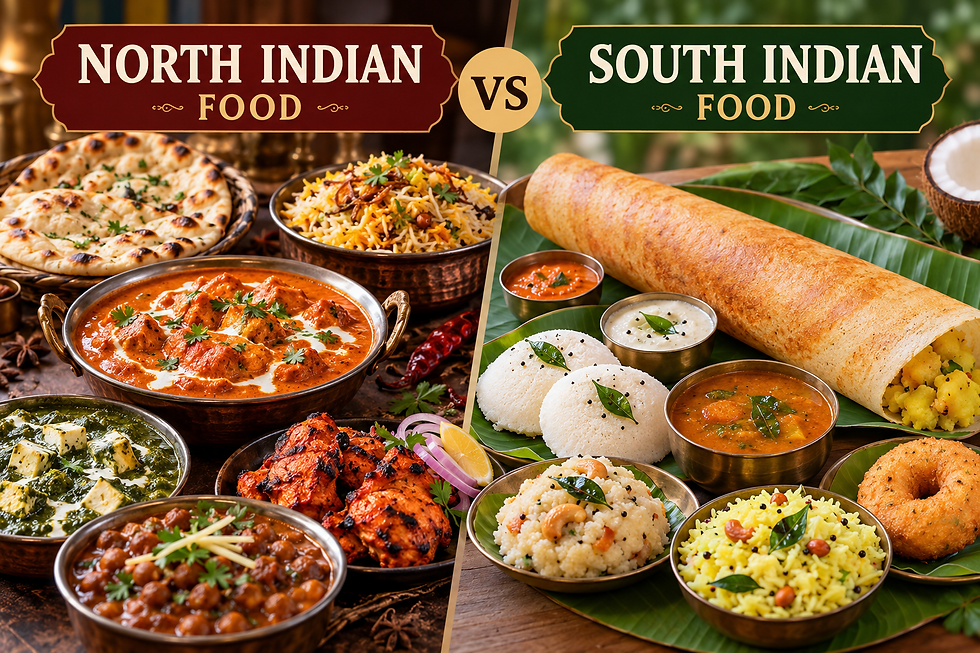
Indian cuisine is incredibly diverse. What many people simply call “Indian food” actually includes hundreds of regional cooking traditions, ingredients, techniques, and flavors.
Two of the broadest categories people encounter at Indian restaurants are North Indian food and South Indian food.
So, what is the difference between North Indian and South Indian cuisine?
In simple terms, North Indian cuisine is often associated with wheat-based breads, rich curries, dairy, paneer, tandoori cooking, and aromatic gravies, while South Indian cuisine is especially known for rice, lentils, coconut, fermented dishes, dosa, idli, sambar, and distinctive chutneys.
However, there is much more to both traditions.
In this guide, we’ll explore the key differences between North Indian and South Indian food, popular dishes from each region, common ingredients, cooking methods, spice profiles, and what you might want to order if you're exploring Indian cuisine for the first time.
North Indian vs South Indian Food at a Glance
Feature | North Indian Food | South Indian Food |
Common staple | Wheat and rice | Rice and lentils |
Popular breads | Naan, roti, paratha, puri | Less bread-focused |
Famous dishes | Butter chicken, palak paneer, chole, tandoori dishes | Dosa, idli, sambar, uttapam |
Dairy use | Often common | Generally less central |
Coconut | Used in some regions | More common in many southern cuisines |
Cooking styles | Tandoor, grilling, curries, slow-cooked gravies | Fermentation, tempering, steaming, griddling |
Common accompaniments | Naan, roti, rice, raita | Sambar, coconut chutney, tomato chutney |
Flavor profile | Rich, aromatic, creamy or smoky | Tangy, savory, spicy, fermented and aromatic |
These are general differences rather than strict rules. India is a large country, and food varies greatly even within northern and southern regions.
What Is North Indian Food?
North Indian food refers broadly to culinary traditions from northern parts of India, including areas such as Punjab, Delhi, Uttar Pradesh, Rajasthan, Haryana, Kashmir and surrounding regions.
Many North Indian dishes use ingredients such as:
Wheat
Basmati rice
Yogurt
Milk and cream
Paneer
Ghee
Tomatoes
Onions
Chickpeas
Lentils
Ginger
Garlic
Cumin
Coriander
Garam masala
Cardamom
One of the most recognizable characteristics of North Indian cuisine is its variety of breads and rich curries.
Popular North Indian Breads
Instead of relying only on rice, many northern meals are eaten with wheat-based breads.
Some common examples include:
NaanA soft, slightly chewy flatbread traditionally cooked at high heat in a tandoor.
RotiA thinner whole-wheat flatbread commonly eaten with vegetables, lentils and curries.
ParathaA layered or stuffed flatbread that can be prepared with fillings such as potatoes or paneer.
PuriA small round bread that puffs up when deep-fried.
At Turmeric Indian Restaurant in Marietta, diners can also find North Indian combinations such as Chole Bhatura and Chole Puri, which pair bread with flavorful chickpea curry.
What Are Popular North Indian Dishes?
North Indian cuisine includes an enormous variety of vegetarian and non-vegetarian dishes.
Some well-known examples include:
Butter Chicken
Butter chicken is made with chicken served in a rich tomato-based gravy traditionally flavored with butter and aromatic spices.
It is often a good introduction to Indian cuisine for people who enjoy smooth, savory sauces.
Palak Paneer
Palak paneer combines paneer, a fresh Indian cheese, with a spinach-based gravy.
It is one of the best-known vegetarian dishes associated with North Indian restaurant cuisine.
Chole
Chole is a flavorful chickpea dish prepared with tomatoes, onions and spices.
It can be eaten with rice or breads such as puri and bhatura.
Tandoori Dishes
Tandoori cooking gets its name from the tandoor, a traditional high-temperature clay oven.
Meat, paneer, vegetables and breads can all be cooked using this technique.
The intense heat creates charred edges and a distinctive roasted flavor.
What Is South Indian Food?
South Indian food broadly refers to the cuisines of southern India, particularly traditions associated with states such as Tamil Nadu, Kerala, Karnataka, Andhra Pradesh and Telangana.
Rice and lentils play an especially important role in many southern dishes.
Common ingredients include:
Rice
Lentils
Coconut
Tamarind
Mustard seeds
Curry leaves
Chilies
Ginger
Black pepper
Sambar spices
Vegetables
Yogurt
Urad dal
Toor dal
One fascinating characteristic of South Indian cooking is the use of fermentation.
Fermenting rice and lentil batter creates the characteristic flavor and texture of foods such as dosa and idli.
What Is Dosa?
A dosa is a thin South Indian crepe traditionally made from fermented rice and lentil batter.
The batter is spread across a hot cooking surface, producing a thin exterior that can become wonderfully crisp.
There are many varieties.
Plain Dosa
A simple crispy dosa served with traditional accompaniments.
Masala Dosa
A dosa filled with seasoned potatoes and spices.
Mysore Dosa
A dosa traditionally prepared with a flavorful spicy paste, often accompanied by potato masala.
At Turmeric Indian Restaurant, dosa dishes are served with accompaniments including coconut chutney, ginger chutney, tomato chutney and sambar.
What Is Idli?
Idli is a soft, steamed cake traditionally made from fermented rice and lentil batter.
Unlike crispy dosa, idli has a soft and fluffy texture.
Because it is steamed rather than fried, its texture and preparation are very different from many bread-based dishes commonly associated with North Indian cuisine.
Idli is often eaten with sambar and chutney.
What Is Sambar?
Sambar is a South Indian lentil-based dish typically prepared with vegetables, spices and a tangy component such as tamarind.
It is commonly served alongside:
Dosa
Idli
Uttapam
Rice
For someone trying South Indian cuisine for the first time, dosa with sambar and chutneys is an excellent way to experience several contrasting flavors and textures in one meal.
Rice vs Bread: One of the Biggest Differences
One of the easiest ways to understand the difference between North and South Indian food is to look at the staple foods.
North Indian Cuisine
Wheat-based foods traditionally play an important role.
You'll often see:
Naan
Roti
Paratha
Puri
Rice is also widely eaten, including basmati rice and biryani.
South Indian Cuisine
Rice is particularly important and can appear in many forms.
It may be:
Served directly with curries
Ground into batter
Fermented with lentils
Used for dosa
Used for idli
Used in other regional dishes
This difference in staple ingredients helps create noticeably different textures and dining experiences.
How Are the Spice Profiles Different?
Both North and South Indian foods use spices extensively, but Indian food is not simply about making dishes hot.
Spices contribute aroma, depth, sweetness, warmth, earthiness and complexity.
Common North Indian Spices
Depending on the dish, cooks may use:
Cumin
Coriander
Turmeric
Cardamom
Cinnamon
Cloves
Chili
Garam masala
Fenugreek
Common South Indian Seasonings
Southern dishes frequently feature ingredients such as:
Mustard seeds
Curry leaves
Dried chilies
Black pepper
Tamarind
Coconut
Lentils
Turmeric
A common South Indian technique is tempering, where spices and aromatic ingredients are briefly heated before being incorporated into a dish.
This releases their aromas and gives the food another layer of flavor.
Is South Indian Food Spicier Than North Indian Food?
Not necessarily.
There are very spicy dishes and mild dishes in both traditions.
Spice levels vary according to:
Region
Recipe
Ingredients
Cook
Personal preference
It is also useful to distinguish spicy from hot.
A dish can contain many spices and have an intense aroma without containing enough chili to create strong heat.
At restaurants such as Turmeric, many curry dishes can be ordered according to preferred spice level, making Indian cuisine approachable even for diners who don't normally eat very hot food.
Dairy and Coconut: Another Major Difference
Dairy products appear prominently in many well-known North Indian dishes.
Common examples include:
Paneer
Yogurt
Cream
Butter
Ghee
This contributes to the creamy character associated with some North Indian curries.
In many South Indian culinary traditions, coconut has a particularly important role.
Depending on the region and recipe, cooks may use:
Fresh coconut
Grated coconut
Coconut chutney
Coconut milk
This is one reason coconut chutney is such a familiar companion to dosa and idli.
Again, these are broad patterns rather than absolute rules.
North Indian vs South Indian Breakfast
Another interesting difference appears at breakfast.
Popular South Indian breakfast foods include:
Dosa
Idli
Uttapam
Upma
Sambar
Chutneys
These foods combine fermented grains, lentils, vegetables and flavorful accompaniments.
Northern breakfast traditions can include foods such as:
Paratha
Puri
Chole
Yogurt
Pickles
The contrast demonstrates how different regional staples shape everyday Indian meals.
Vegetarian Food in North and South Indian Cuisine
Indian cuisine offers an extraordinary variety of vegetarian dishes.
North Indian Vegetarian Foods
Popular examples include:
Palak paneer
Chana masala
Dal
Vegetable curry
Aloo dishes
Paneer dishes
Baingan bharta
South Indian Vegetarian Foods
Examples include:
Dosa
Idli
Sambar
Uttapam
Vegetable curries
Upma
Rice-based dishes
For vegetarians exploring Indian food, both traditions offer far more options than simply replacing meat in a dish.
Many Indian recipes were developed as vegetarian dishes from the beginning.
Which Is Better: North Indian or South Indian Food?
There really isn't a winner.
The better question is:
What kind of flavors and textures do you enjoy?
If you enjoy naan, paneer, rich curries, chickpeas, grilled dishes and aromatic gravies, you may gravitate toward North Indian food.
If you enjoy crispy dosa, fermented flavors, rice, lentils, tangy sambar and coconut chutney, you may particularly enjoy South Indian cuisine.
Trying both is the best way to understand just how diverse Indian food can be.
What Should a First-Time Indian Food Customer Order?
If you're new to Indian cuisine, try building a meal around contrasting flavors and textures.
If You Want to Explore North Indian Food
Consider trying:
A paneer or chicken curry
Basmati rice
Naan or another Indian bread
A lentil or chickpea dish
If You Want to Explore South Indian Food
Consider:
Masala dosa
Sambar
Coconut chutney
Tomato or ginger chutney
A dosa platter can be particularly useful for beginners because you can taste the crisp dosa, savory potato filling, lentil-based sambar and multiple chutneys together.
Can You Get Both North and South Indian Food in Marietta, GA?
Yes.
Turmeric Indian Restaurant in Marietta, Georgia serves both North Indian and South Indian cuisine, making it possible to explore different Indian culinary traditions in one place.
Turmeric is located at 1043 Sandy Plains Road, Marietta, GA 30066.
The menu includes North Indian curries and vegetarian dishes as well as South Indian specialties such as dosa, idli, upma and uttapam.
Whether you're already familiar with Indian food or ordering it for the first time, trying foods from different regions is one of the best ways to discover how diverse Indian cuisine really is.
Frequently Asked Questions About North and South Indian Food
What is the main difference between North Indian and South Indian food?
The biggest general difference is in staple ingredients and cooking traditions. North Indian cuisine commonly features wheat breads, paneer, dairy, tandoori cooking and rich curries, while South Indian cuisine prominently features rice, lentils, fermented batters, dosa, idli, sambar, coconut and chutneys.
Is dosa North Indian or South Indian?
Dosa is a South Indian dish traditionally made from fermented rice and lentil batter.
Is naan North Indian or South Indian?
Naan is most strongly associated with North Indian restaurant cuisine and is traditionally cooked in a tandoor.
Is paneer North Indian food?
Paneer is especially prominent in many North Indian dishes, including palak paneer and other paneer-based curries.
Is biryani North Indian or South Indian?
Biryani cannot be neatly classified as only North or South Indian. India has many regional styles of biryani, including famous traditions from Hyderabad and other regions.
Is all Indian food spicy?
No. Indian food uses many spices, but that doesn't mean every dish is hot. Many dishes can be mild while still containing aromatic spices.
Is South Indian food vegetarian?
South Indian cuisine contains a tremendous variety of vegetarian food, but it is not exclusively vegetarian. Different southern regions also have longstanding traditions involving seafood and meat.
What is a good South Indian dish for beginners?
Masala dosa is an excellent starting point. The crispy fermented crepe, seasoned potato filling, sambar and chutneys allow you to experience several important South Indian flavors at once.
What is a good North Indian dish for beginners?
Paneer dishes, chickpea curries, dal, tandoori items and milder chicken curries are approachable choices, especially when paired with naan or basmati rice.
Explore North and South Indian Cuisine at Turmeric Indian Restaurant
Indian cuisine isn't a single style of cooking.
From a crispy South Indian dosa dipped into sambar and coconut chutney to a North Indian curry enjoyed with warm bread, every region offers something different.
If you're looking to explore North Indian and South Indian food in Marietta, GA, visit Turmeric Indian Restaurant and discover dishes from both traditions.
Turmeric Indian Restaurant1043 Sandy Plains RoadMarietta, GA 30066
Dine in, order takeout, or explore the menu and discover a new Indian dish on your next visit.


Comments