
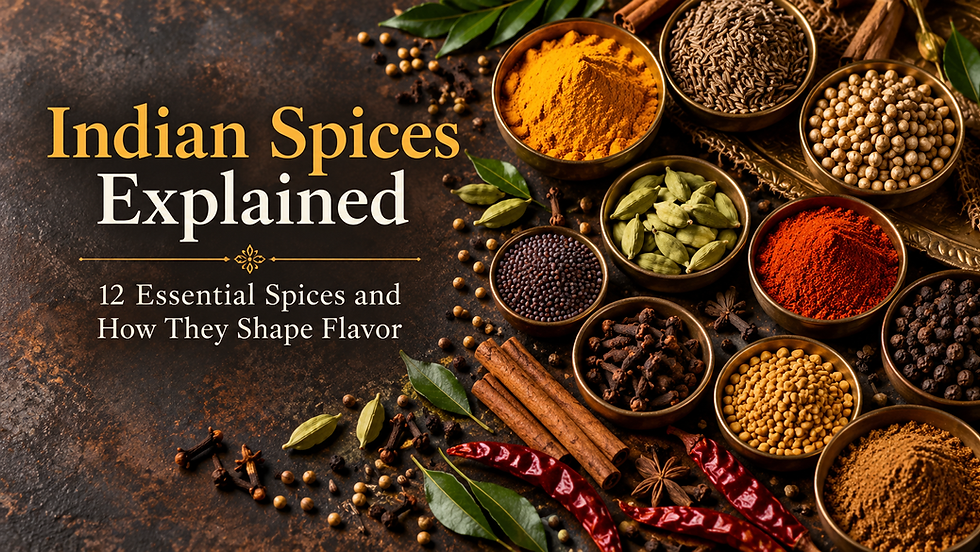
Indian Spices Explained: 12 Essential Spices and How They Shape Flavor
Indian food is famous for its bold aroma, deep flavor, and complex seasoning. But one of the biggest misunderstandings about Indian cuisine is that it is simply “spicy.”
In reality, Indian cooking uses spices for much more than heat.
Spices can add:
Warmth
Sweetness
Earthiness
Citrus-like freshness
Smokiness
Bitterness
Aroma
Depth
A dish may contain several spices without being hot at all.
In this guide, we’ll explain some of the most important spices used in Indian cooking, what they taste like, how they are used, and why they matter.
What Makes Indian Spices Different?
Indian cuisine often combines multiple spices in a single dish.
Instead of relying on one dominant seasoning, cooks build flavor in layers.
Some spices may be added at the beginning of cooking, while others are added later for aroma.
Certain spices are also toasted or heated in oil or ghee to release their essential oils.
This technique helps create the rich flavor associated with many Indian dishes.
1. Turmeric
Turmeric is one of the most recognizable spices in Indian cuisine.
It has a warm yellow-orange color and a mild earthy flavor.
What Does Turmeric Taste Like?
Turmeric has an:
Earthy
Slightly bitter
Warm flavor
It is usually used in small amounts.
How Is Turmeric Used?
Turmeric is commonly added to:
Lentil dishes
Vegetable curries
Rice dishes
Marinades
Soups
Meat dishes
It also gives many Indian dishes their characteristic golden color.
2. Cumin
Cumin is one of the most widely used spices in Indian cooking.
It may be used as whole seeds or ground into powder.
What Does Cumin Taste Like?
Cumin has a:
Warm
Earthy
Slightly smoky flavor
How Is Cumin Used?
Cumin is commonly used in:
Curries
Dal
Chickpea dishes
Rice
Vegetable dishes
Spice blends
Whole cumin seeds are often toasted or heated in oil before other ingredients are added.
3. Coriander
Coriander seeds come from the same plant that produces cilantro leaves.
In Indian cooking, ground coriander is extremely common.
What Does Coriander Taste Like?
Ground coriander has a:
Mild
Slightly citrusy
Nutty flavor
It is less intense than many other spices and helps create balance.
How Is Coriander Used?
It can appear in:
Curries
Marinades
Lentil dishes
Vegetable dishes
Masalas
Cumin and coriander are frequently used together.
4. Garam Masala
Garam masala is not a single spice.
It is a blend of aromatic spices.
The exact recipe varies by family, region, and cook.
A garam masala blend may include:
Cumin
Coriander
Cardamom
Cinnamon
Cloves
Black pepper
Nutmeg
What Does Garam Masala Taste Like?
It usually has a:
Warm
Aromatic
Slightly sweet
Complex flavor
Unlike chili powder, garam masala is primarily about aroma rather than heat.
How Is Garam Masala Used?
It is often added toward the end of cooking to preserve its fragrance.
It can be used in:
Curries
Lentils
Paneer dishes
Meat dishes
Rice preparations
5. Cardamom
Cardamom has one of the most distinctive aromas among Indian spices.
Both green and black cardamom are used in Indian cooking.
Green Cardamom
Green cardamom has a:
Sweet
Floral
Fresh aroma
It may be used in both savory dishes and desserts.
Black Cardamom
Black cardamom has a deeper:
Smoky
Earthy
Strong flavor
It is more common in savory dishes.
Cardamom is frequently used in biryani, curries, tea, and desserts.
6. Cinnamon
Cinnamon is not only used in sweet dishes.
In Indian cuisine, it is often used in savory cooking.
What Does Cinnamon Add?
Cinnamon contributes:
Warmth
Sweet aroma
Mild spice
It may be added whole to oil or rice dishes and later removed before serving.
It is frequently used in:
Biryani
Curries
Garam masala
Rice dishes
7. Cloves
Cloves are small but powerful.
They have an intense aroma and should usually be used sparingly.
What Do Cloves Taste Like?
They are:
Warm
Slightly sweet
Strong
Aromatic
Cloves often appear in:
Rice dishes
Biryani
Curries
Garam masala
Slow-cooked gravies
8. Mustard Seeds
Mustard seeds are especially important in many South Indian dishes.
They are often heated in oil until they begin to pop.
What Do Mustard Seeds Taste Like?
They have a:
Nutty
Slightly sharp
Earthy flavor
They are often combined with:
Curry leaves
Chilies
Lentils
This type of tempering is frequently used in South Indian cooking.
9. Fenugreek
Fenugreek has a strong and slightly bitter flavor.
It can be used as seeds or dried leaves.
Dried fenugreek leaves are often called kasuri methi.
What Does Fenugreek Taste Like?
It has:
Earthy
Slightly bitter
Sweet aromatic notes
Kasuri methi is commonly added to rich curries to give them a distinctive aroma.
10. Chili
Chili contributes heat, but not every Indian dish contains a large amount of it.
Different chilies can provide different levels of spice and color.
What Does Chili Add?
Depending on the variety, chili can add:
Heat
Color
Smokiness
Fruity notes
It is important to remember that a dish can contain many spices without being very hot.
11. Black Pepper
Black pepper has a long history in Indian cooking.
It is especially important in several South Indian culinary traditions.
What Does Black Pepper Taste Like?
It provides:
Sharp heat
Warmth
Earthiness
Unlike chili, black pepper creates a different kind of heat that builds gradually.
12. Curry Leaves
Curry leaves are not the same as curry powder.
They are aromatic leaves commonly used in South Indian cooking.
What Do Curry Leaves Taste Like?
They have a:
Citrusy
Herbal
Slightly nutty aroma
Curry leaves are often fried briefly in oil along with mustard seeds and chilies.
They are frequently used in:
Sambar
Chutneys
Rice dishes
Vegetable preparations
Lentil dishes
What Is Tempering in Indian Cooking?
Tempering is a cooking technique in which spices are briefly heated in oil or ghee.
This process helps release their aroma and flavor.
Common ingredients used in tempering include:
Mustard seeds
Cumin seeds
Curry leaves
Dried chilies
Garlic
Asafoetida
The hot spice mixture may then be added to lentils, curries, or vegetables.
This small step can dramatically change the flavor of a dish.
What Is the Difference Between Spicy and Hot?
One of the most important things to understand about Indian cuisine is that spicy does not always mean hot.
A dish can contain:
Cumin
Coriander
Cardamom
Cinnamon
Cloves
Turmeric
and still be mild.
“Spiced” means the dish contains aromatic seasonings.
“Hot” usually refers specifically to the burning sensation created by chili peppers or similar ingredients.
This is why many Indian dishes can be highly flavorful without being extremely hot.
Why Do Indian Recipes Use Multiple Spices?
Each spice plays a different role.
For example:
Turmeric may provide color and earthiness.
Cumin adds warmth.
Coriander adds freshness.
Cardamom adds aroma.
Chili adds heat.
Garam masala adds complexity.
When combined correctly, the spices create layers of flavor instead of one dominant taste.
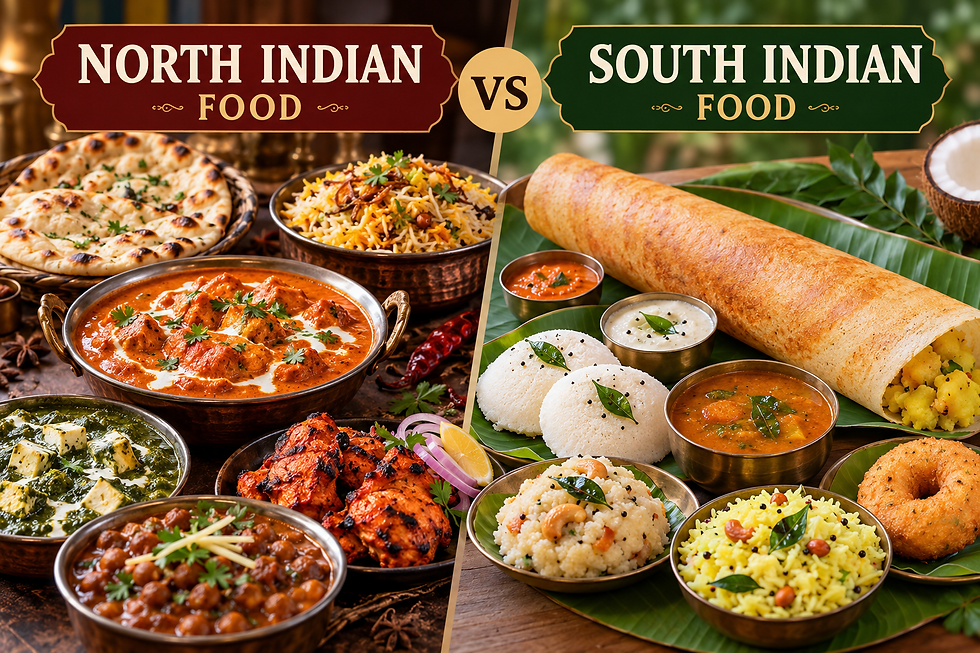
Do North and South Indian Foods Use Different Spices?
Yes, although there is considerable overlap.
North Indian Cooking Often Uses
Cumin
Coriander
Garam masala
Cardamom
Cinnamon
Cloves
Fenugreek
South Indian Cooking Often Features
Mustard seeds
Curry leaves
Black pepper
Dried chilies
Tamarind
Turmeric
Cumin
These are general patterns, and Indian cuisine varies significantly by region.
Are Indian Spices Always Strong?
Not necessarily.
The final flavor depends on:
Quantity
Cooking method
When the spice is added
Whether it is whole or ground
How long it is cooked
What other ingredients are present
For example, gently toasting cumin seeds can produce a different flavor than adding ground cumin directly to a curry.
What Spices Are Good for Beginners?
If you're beginning to explore Indian flavors, start with:
Cumin
Coriander
Turmeric
Garam masala
Cardamom
These spices appear in many familiar Indian dishes and can help you recognize different flavor profiles.
Which Indian Dishes Are Good for Exploring Spices?
If you're dining at an Indian restaurant, different dishes can help you experience spices in different ways.
You might try:
BiryaniAromatic rice cooked with spices such as cardamom, cloves, cinnamon, and cumin.
DalLentils often seasoned with cumin, turmeric, garlic, and a finishing tempering.
Tandoori dishesMarinated dishes where spices combine with yogurt and high-heat cooking.
Paneer curriesVegetarian dishes where spices are balanced with paneer, tomatoes, cream, or spinach.
Dosa with sambar and chutneysA useful introduction to South Indian flavors such as mustard seeds, curry leaves, lentils, and tamarind.
Frequently Asked Questions About Indian Spices
What are the most common spices in Indian food?
Some of the most common include cumin, coriander, turmeric, chili, cardamom, cinnamon, cloves, mustard seeds, fenugreek, and garam masala.
Is curry powder used in all Indian food?
No. “Curry powder” is a general spice blend and is not the foundation of every Indian dish. Indian cooks often use individual spices or custom spice blends depending on the recipe.
What gives Indian food its yellow color?
Turmeric is commonly responsible for the yellow or golden color in many dishes.
What makes Indian food hot?
Chili peppers are usually responsible for most of the heat, although black pepper and other spices can also create warmth.
What is garam masala?
Garam masala is a blend of aromatic spices. The exact ingredients vary, but it often includes cumin, coriander, cardamom, cinnamon, cloves, and black pepper.
Are Indian spices the same in every region?
No. Spice combinations and cooking techniques vary significantly across India.
Experience the Flavor of Indian Spices in Marietta, GA
Understanding Indian spices makes it easier to appreciate just how much thought goes into each dish.
Indian cooking is not simply about adding heat. It is about balancing aroma, warmth, freshness, richness, and texture.
At Turmeric Indian Restaurant in Marietta, Georgia, guests can explore a variety of North and South Indian dishes and experience these flavors in different forms.
Turmeric Indian Restaurant1043 Sandy Plains RoadMarietta, GA 30066
Whether you're trying Indian food for the first time or already have a favorite dish, paying attention to the spices can make your next meal even more interesting.


Comments